Service
Wolf built-in wall oven repair — heat, hinges, seals and the convection fan
Single and double built-in ovens, plus the warming drawer and speed oven that usually share the same cabinet run. Sensors, elements, hinges, seals and the convection fan that moves the heat.
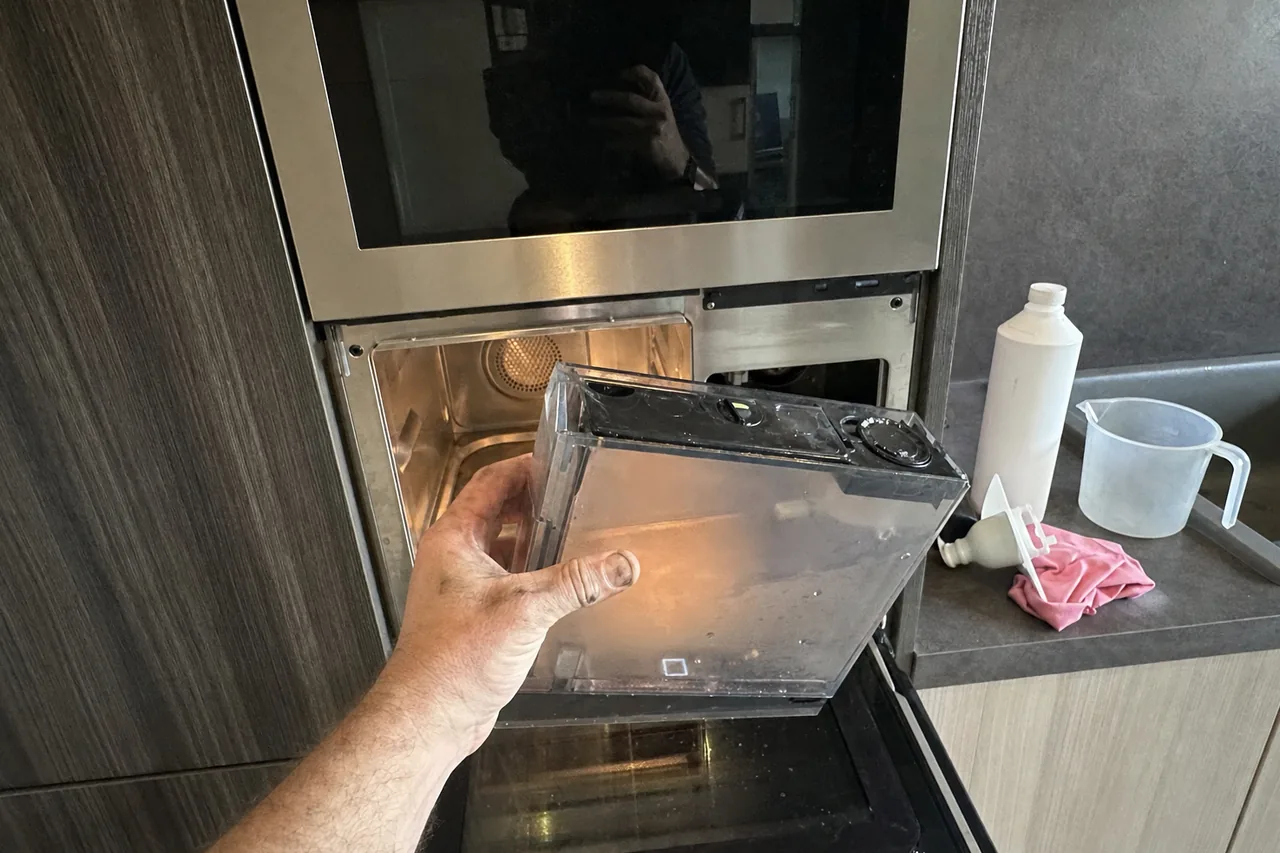
What people describe when they call
- The oven preheats slowly or never reaches the set temperature
- Food browns hard on one side of the rack and not the other
- The display lights but the cavity stays cold
- The door is hot on the outside and the handle is uncomfortable
- The upper oven works and the lower one does not
- The convection fan rattles, whines or runs after the oven is off
- The door drops open a few degrees instead of latching shut
- The self-clean cycle stops early and leaves the door locked
- The warming drawer no longer holds a plate warm
A built-in oven is harder to diagnose than a range for one reason: it is buried in cabinetry. You cannot see the back, the vents are hidden, and the failure that matters is often happening in a space nobody has looked at since the kitchen was finished. So the diagnosis starts with the things that can be measured from the front, and only then do we pull the unit.
The oven that will not get hot enough
Three causes account for nearly all of these, and they are easy to tell apart once you stop guessing.
The first is the sensor. It is a resistance probe; it reads a specific value at a specific temperature, and a drifted sensor makes the control board honest and wrong at the same time. The second is an element that has partly failed — a bake element with a break will still glow along part of its length and still draw current, which is why “it lights up” proves nothing. The third is heat loss through a door that no longer seals, and that one is free to check: run the oven to temperature and move the back of your hand slowly up the door edge.
The order matters. Sensors are cheap, elements are middling, boards are not, and a board is almost never the answer on an oven that heats but heats badly.
Uneven browning is usually airflow
An oven that browns hard on the right and pale on the left is describing its air movement. On a convection oven that points at the fan, its motor, or the baffle in front of it. Fans get noisy before they get slow, so a rattle or a whine that appeared a few months before the browning problem is the same fault reported earlier.
There is also a class of uneven-heat complaint that turns out to be the installation. A built-in oven needs its ventilation path clear, and the cabinet opening has to be the size the specification asked for. In older St. Augustine kitchens where a cabinet was cut to accept the oven rather than built for it, a blocked or shortened vent path shows up years later as a cooling blower that never stops and a front panel that runs hot.
Doors, hinges and the self-clean trap
The door assembly does more work than any other part of an oven. Hinges carry the weight, springs return it, the gasket seals it, and the inner glass pack manages the heat. A door that drops open a few degrees is a hinge that has lost its tension, and no amount of adjustment at the latch fixes it.
Self-clean is where an ageing door becomes an emergency. The cycle runs the cavity far hotter than baking ever does, and it locks the door for the duration. If the cycle aborts partway through — over-temperature, a failed latch motor, a tripped thermal cut-out — the door can stay locked with the oven full of ash. If that has happened, say so on the phone. It changes what we bring.
Warming drawers and speed ovens
The same cabinet run usually holds one or both. A warming drawer that no longer holds temperature is a small, well-defined repair: element, thermostat, or a seal along the drawer edge that has flattened. A convection speed oven adds a microwave side, which is the one part of a kitchen where a home repair is a genuinely bad idea; the high-voltage section holds a charge after the appliance is unplugged.
Flat $80 to diagnose, credited toward the repair. Written estimate before anything is ordered, 90 days on labour, 365 on parts, genuine OEM throughout.
What gets checked
- Oven sensor resistance at room temperature, compared against the expected value
- Bake and broil element continuity and current draw under load
- Convection fan bearing play, blade clearance and the direction it reverses
- Door hinge tension and gasket compression at all four corners
- Cooling blower airflow, which is what keeps the cabinet and the front panel safe
- Latch mechanism and the lock motor if a clean cycle has stranded the door
- Cavity thermometer reading against the display, taken after a full settle
Flat $80 diagnostic, credited to the repair. You get a written estimate before any part is ordered or any labour is billed. 90 days on labour, 365 days on parts, genuine OEM parts only.
The fee, then the band the part sits in
Money
What does built-in wall oven repair cost?
The bands below are the ones this work falls into. Everything else on the book is on the pricing page.
| Work | Parts and labour |
|---|---|
| Diagnostic visit | $80 flat, credited |
| Oven thermostat or temperature sensor | $170–$520 |
| Convection fan or motor | $250–$730 |
| Door hinge, glass or seal | $180–$640 |
| Control board or touch panel | $420–$1,100 |
Bands, not quotes: they are what this work has actually cost, parts and labour together, from $80 at the door to the firm figure that goes on paper after the diagnosis. The whole table
- What does built-in wall oven repair cost?
- The visit is a flat $80, credited in full against the repair. After that the price follows the component that failed: Oven thermostat or temperature sensor runs $170–$520, convection fan or motor $250–$730, parts and labour together. You get a written estimate before any part is ordered or any labour is billed.
- Is the $80 charged on top of the repair bill?
- No. Flat $80 diagnostic covering the visit and the full diagnostic sequence, credited toward the repair once you approve the work. If you decide against the work, the fee stands and the written diagnosis is yours to take anywhere — it names the failed part and the part number.
- When is replacing the appliance the better buy?
- Replacing instead of repairing runs $5,200–$10,500 (wall oven or built-in oven, the usual repair-or-replace comparison) or $8,500–$16,500 (dual-fuel or gas range, 36 inch and up). A comparable Wolf range, rangetop or wall oven, appliance only — before delivery, installation, ventilation or cabinetry. National appliance pricing, not Florida labour. Against those figures a repair at $170–$520 is the cheaper course in most kitchens.
Places this comes up
Written up in full
- A Wolf oven that won't turn on: the breaker, lockouts, outages and a dead display How to wake a silent Wolf oven: cycle the breaker for 30 seconds, rule out demo mode, the 12-hour shut-off and outage lockouts, then know when a dark display means a failed control part.
- The oven is not heating, and what that narrows to Not heating at all and not heating enough are two different faults. What gets measured first on a Wolf oven: the burner igniter's current draw, the safety valve it is meant to open, the temperature sensor's resistance, the door seal. The control board comes last, not first.
- What to check before you call us Some of these end the problem without a visit. The rest turn a vague complaint into a specific one, which is the difference between a diagnosis and a guess. Plus the three things not to touch.
- The appliance fault that arrives weeks after the storm Northeast Florida takes thunderstorms most of the summer and has had multi-day outages more than once. Appliance electronics often survive the event and fail some weeks later, which is why the outage never gets mentioned on the call.
What people said after this work
Customer feedback
After Built-in wall oven calls
4.3 out of 5, across 87 customer reviews. Each entry below is one visit, in the words of the person who paid for it.
The clock and timer went blank after a night of lightning. He checked the supply and the board separately, replaced the part the surge had taken out and restored our settings. The estimate reached us late.
Gaspard L.
The oven heats properly again. But the cabinet had to come apart to reach the back of it, and that meant a second visit with different tools to finish something we had booked as one job.
Ruggero B.
The oven heats correctly again. My complaint is that the trim panel was left with two screws missing, which I only noticed once he had gone, and then a return visit had to be arranged for it.
Augusto N.