St. Johns County
Marsh Creek and Sea Colony, 32080 — marsh air in the blower housing
Gated, purpose-built and set on the salt marsh behind A1A South. The kitchens here were designed around the appliances, so what goes wrong is corrosion, ventilation pressure, and the outdoor equipment.
The conditions here
- ZIP codes
- 32080
- Kitchens
- Purpose-built, planned around the appliances
- Salt air
- Yes — blower housings, hinges, cast grates and stainless
- Installation
- Planned — full openings, dedicated circuits, duct routes designed in
Neighbourhoods: Marsh Creek, Sea Colony
Marsh Creek and Sea Colony sit off A1A South on Anastasia Island, behind the dune line and against the salt marsh rather than the ocean. That distinction matters more than it sounds. Beachfront gets salt spray in weather; a house on the marsh side gets salt-laden air steadily, at low concentration, on the prevailing breeze, for years without interruption.
Steady beats dramatic when it comes to corrosion.
What the marsh air actually does
Salt is hygroscopic. It pulls water vapour out of the air onto the surface it has settled on and keeps that surface damp long after any visible moisture has gone. On a stainless panel in an air-conditioned kitchen this is a slow, cosmetic process. On a spinning steel component in an unconditioned space it is not.
The blower is where we find it first, and by a wide margin. A hood blower runs at a few thousand rpm, and out here it is doing so in air that never really dries out. Bearings roughen and whine, and the wheel picks up a film of cooking grease that traps salt unevenly, so the wheel loses balance. An unbalanced wheel vibrates; vibration wears the bearings faster; the two faults accelerate each other.
The tell is chronological. In 32080 the hood almost always gets loud before it gets weak. If a hood in Marsh Creek has become noisy over the past year, that is the diagnosis arriving early and cheaply. Left another year, it becomes a motor.
Remote and rooftop blowers, which several of these houses have precisely because they are quieter in the kitchen, sit outdoors in that same air. They fail on the same mechanism, faster, and out of earshot.
Purpose-built kitchens, so the faults are different
Unlike Davis Shores or the old city, nothing here was retrofitted. These are kitchens laid out from the start around full-size appliances, with proper openings, level floors, dedicated circuits and duct routes that were planned rather than improvised. That removes most installation faults from the list before we arrive.
What replaces them is the building envelope. Houses built to this standard are sealed tight, and a hood cannot exhaust air the house will not let in. When a powerful hood runs in a tight house with no make-up air path, it works against a pressure it was never sized for. The symptoms are unmistakable once you know them: the fan is loud and the kitchen is not clearing, exterior doors are harder to pull open with the hood on high, and turning the hood down actually improves the smell in the room.
That last one is counter-intuitive enough that people rarely mention it, so we ask. It is diagnostic — a hood that performs better on medium than on high is telling you the house is the restriction, not the motor.
Outdoor kitchens live outdoors
A good number of houses here have a built-in grill on a lanai or a summer kitchen facing the marsh. Outdoor equipment is engineered for weather, but engineered for weather means it degrades slowly rather than not at all, and the things that fail are consistent: igniters and their leads, where moisture reaches a ceramic; burner ports, which corrode from the inside if the unit is used seasonally and left uncovered; and control valves that stiffen from salt in the stem.
Seasonal use is the aggravating factor. An outdoor grill used hard from October to May and then left through a humid summer is in worse condition in September than one used year-round, because heat drives moisture out and idle time lets it sit.
How a hood complaint is actually worked here
Because almost everything out here funnels into ventilation, it is worth setting out the order, since it is not the order most people expect.
First we settle what the complaint actually is, because “the hood is not working” covers two opposite faults. Loud and still clearing is a mechanical problem at the blower. Quiet and not clearing is an air problem somewhere in the path. The two lead in different directions and the wrong answer wastes the visit.
Then the cheap end of the path, outward. Filter type, condition and seating — baffles fitted the wrong way round or a mesh filter loaded with grease will cost capture on their own. The wheel and housing, for grease and salt build-up and for the imbalance that follows it. The exterior damper on the outside wall, which is the most weather-exposed component in the whole system out here and the one nobody ever looks at. Then the duct: route, length, number of turns, and what the termination is, because a cap sized for a bathroom fan will strangle a kitchen hood no matter what is pushing.
Only after all of that do we test the room. If the house cannot admit make-up air, the blower is fighting a pressure it was never sized for and every reading above is misleading. And only after the room do we reach the motor, which is the most expensive item on the list and the least often the cause.
The point of that order is that four of the five stops are cleaning, adjustment or a cheap part. Starting at the motor is how people end up buying one twice.
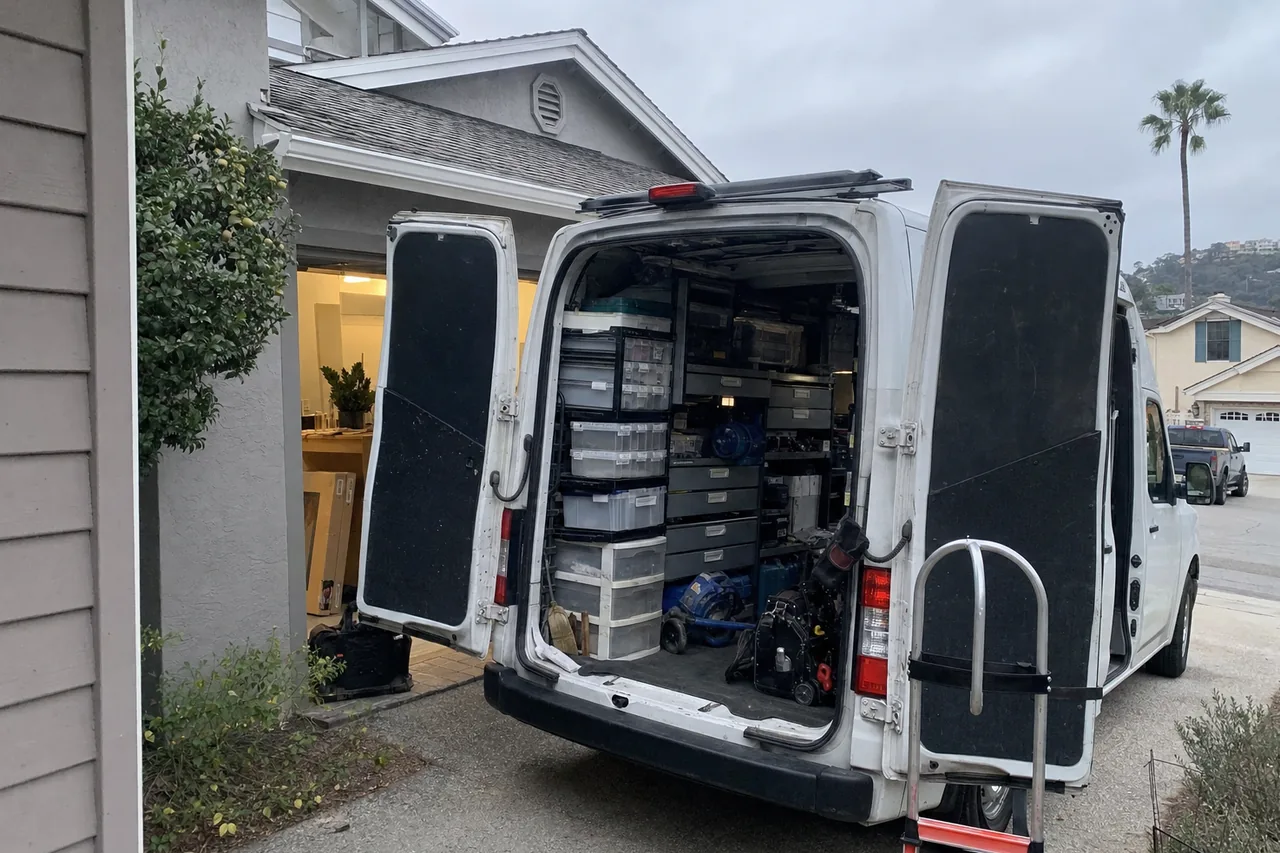
Both communities are gated. Tell us the gate arrangement when you book and we will have it sorted before the van is at the entrance.
What we are called out for here
Flat $80 diagnostic, credited to the repair. Call +1 (904) 478-8963 .
What a visit to Marsh Creek costs
Money
What does a repair in Marsh Creek cost?
The flat diagnostic is the same everywhere we go. What follows it is the band the failed part sits in.
| Work | Parts and labour |
|---|---|
| Diagnostic visit | $80 flat, credited |
| Igniter or spark module replacement | $190–$500 |
| Convection fan or motor | $250–$730 |
| Oven thermostat or temperature sensor | $170–$520 |
| Burner valve or orifice service | $210–$650 |
Bands, not quotes: they are what this work has actually cost, parts and labour together, from $80 at the door to the firm figure that goes on paper after the diagnosis. The whole table
- What does a repair cost in Marsh Creek?
- The same as anywhere else we go: a flat $80 diagnostic, credited to the repair, then the band the failed part sits in. Igniter or spark module replacement runs $190–$500, convection fan or motor $250–$730, parts and labour together.
- Is there a travel charge to Marsh Creek on top of the $80?
- Not inside the 40 miles around St. Augustine that this bench covers, and Marsh Creek is inside it. Beyond that radius the travel is quoted before you commit. Hours are Mon–Fri 8am–6pm · Sat 9am–4pm · Closed Sunday.
- What happens if the appliance is not worth repairing?
- We say so in writing, with the part price that led to the conclusion. Replacing instead of repairing runs $5,200–$10,500 (wall oven or built-in oven, the usual repair-or-replace comparison) or $8,500–$16,500 (dual-fuel or gas range, 36 inch and up). A comparable Wolf range, rangetop or wall oven, appliance only — before delivery, installation, ventilation or cabinetry. National appliance pricing, not Florida labour.
Field notes from this ground
- Salt air and the hood blower on Anastasia Island In 32084 and 32080 the ventilation system fails on a schedule you can hear. Salt is hygroscopic, blower housings never dry out, and an unbalanced wheel and a dry bearing accelerate each other.
- The appliance fault that arrives weeks after the storm Northeast Florida takes thunderstorms most of the summer and has had multi-day outages more than once. Appliance electronics often survive the event and fail some weeks later, which is why the outage never gets mentioned on the call.
What people here said afterwards
Customer feedback
After calls in Marsh Creek
4.3 out of 5, across 87 customer reviews. Each entry below is one visit, in the words of the person who paid for it.
The fan works now and the diagnosis was sound enough. But the first visit ended with nothing done because the part had never been ordered, and nobody told me that before he drove all the way out.
Wilhelmine T.
Our range door glass had gone cloudy and the seal had gone hard as a board. He fitted a new seal, cleaned both panes and adjusted the hinges so it shuts square. It closes the way it used to.
Marcelline F.
The oven in our range would light and then drop out on the second cycle of the evening. He measured the flame sensing circuit hot rather than cold, found a lead breaking down under heat, and replaced that run.
Ottoline F.